
PST to EST conversion matters more than ever in 2026 as remote teams stretch from California to New York. Here is the thing. When you need to turn a Pacific time meeting into its Eastern equivalent you simply add three hours and you are good to go.
I have spent years juggling calls with folks on both coasts while building my own projects and helping friends avoid the usual headaches. That steady three hour gap between Pacific Time to Eastern Time creates real opportunities if you handle it right.
Why PST to EST Still Trips People Up
Look most people assume time zones shift wildly with daylight saving but here is what most people miss. The difference between PST and EST stays locked at exactly three hours year round because both zones spring forward and fall back on the same schedule. You add three hours to any PST time and you land squarely in EST.
For instance 9am PST becomes noon EST. 10 am PST turns into 1pm EST. This pattern holds whether you check 11am PST to EST or 5pm PST to EST. Honestly it feels simple once you see it in action yet I still catch experienced professionals double checking their calendars because one wrong assumption can push a meeting into someone’s dinner hour.

Understanding the Core Time Difference
Pacific Standard Time sits three hours behind Eastern Standard Time. When clocks in New York show 2pm EST your friends in Los Angeles see 11am PST. Flip it around and 3pm EST becomes noon PST.
This reliable offset powers everything from daily standups to cross country client calls. I remember one project where our East Coast designer kept scheduling reviews at what she thought was a reasonable afternoon slot only to realize it landed at lunch for the West Coast developers. Switching to a quick mental add three hours rule fixed that immediately.
You will hear people search for est to pst just as often and the math works the same way in reverse. Subtract three hours from any Eastern time and you get the Pacific equivalent.
Quick Conversion Examples You Will Use Every Week
Let me walk you through some of the most common ones I get asked about.
Take 9am PST to EST. Add those three hours and you sit at noon EST which lines up perfectly for East Coast lunch time meetings. 10am PST to EST lands at 1pm EST. Many teams settle on this window because it gives everyone a fresh start without cutting into late afternoon energy.
What about afternoon slots? 2pm EST to PST brings you back to 11am PST. 5pm PST to EST equals 8pm EST which works great for wrapping up the day with East Coast partners but you would not want to make that a regular thing if people value their evenings.
Other frequent checks include 11am PST to EST at 2pm EST, 3pm PST to EST at 6pm EST, and 1pm PST to EST at 4pm EST. Late ones like 10pm PST to EST hit 1am EST so you save those for true emergencies.
I keep a mental list of these because they pop up constantly in remote work. 8am PST to EST is 11am EST. 7am PST to EST becomes 10am EST. These early Pacific starts give you solid overlap with East Coast mornings.
PST to EST Converter Tools That Actually Help
You have plenty of options when you need fast help. A solid pst to est converter saves minutes every single day especially when you juggle multiple meetings.
My favorite approaches combine quick mental math with reliable online tools. Sites dedicated to pacific time to est give you instant results plus they often show both directions so you see est to pst converter outputs too. Some even let you pick specific dates to account for any rare edge cases though the three hour rule rarely breaks.
For mobile use I like apps that integrate directly with calendars. They auto adjust when you invite people from different zones and they flag potential overlaps before you hit send. In 2026 these tools have gotten smarter with AI suggestions for best meeting windows across coasts.

Real World Benefits and a Few Drawbacks
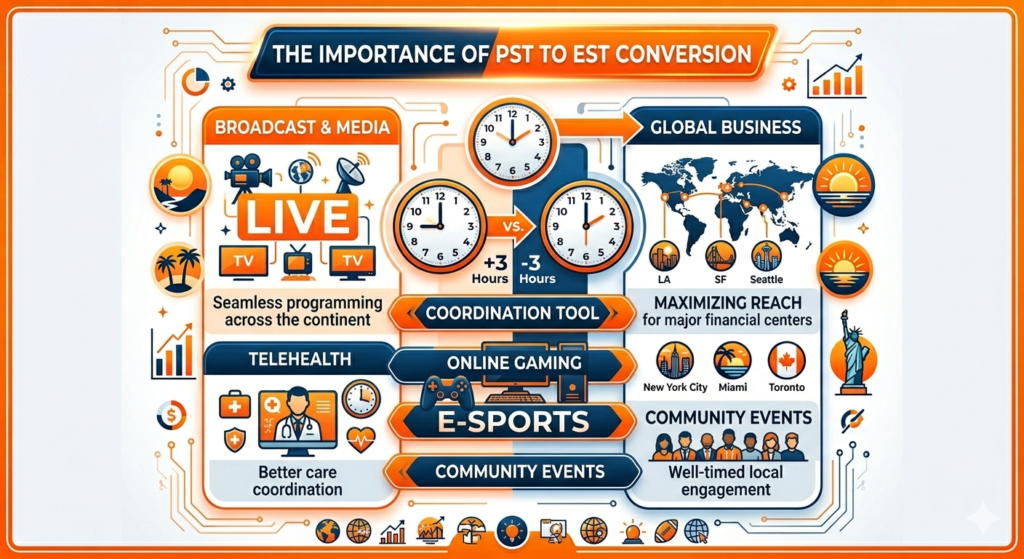
Here is where it gets practical. Mastering pst to est time delivers clear wins for remote workers and businesses. You cut down on missed connections and you show respect for everyone’s schedule. Teams that get this right report higher productivity because fewer hours get wasted on rescheduling.
Benefits stack up fast. Better work life balance comes when you stop accidentally booking 8pm EST calls for West Coast parents. Stronger collaboration follows because people feel considered. Some companies even see measurable ROI through faster project delivery when meetings actually happen at convenient times for everyone.
On the flip side you cannot ignore the cons. Early Pacific mornings or late Eastern evenings create fatigue if you overuse them. Families notice when dad always takes calls during dinner. Plus not every tool handles daylight saving transitions perfectly though in practice both zones move together so issues stay rare.
I weigh these factors every time I plan my own week. The pros far outweigh the cons once you build good habits.
2025 2026 Trends Shaping Time Zone Management
Remote work continues its climb and that drives more PST to EST searches than ever. Recent data shows distributed teams now make up a huge chunk of growing companies with coast to coast setups becoming standard. Global spending patterns also highlight why these two zones matter with Eastern and Pacific time zones capturing significant portions of daily economic activity.
AI powered scheduling tools exploded in popularity over the past year. They do more than simple conversion. They suggest optimal overlap times and even draft polite reschedule messages when conflicts appear. Expect even tighter integration with calendars through 2026.
Common Mistakes and How to Avoid Them
One mistake I see repeatedly involves forgetting that the difference stays constant. People sometimes treat it like international zones that shift independently. Another big one is overloading prime overlap hours so everyone ends up in back to back meetings with zero breathing room.
Watch out for assuming everyone follows the same work hours. An East Coast early riser might love 7am PST calls while a West Coast night owl dreads them. Always confirm preferences instead of guessing.
Practical Tips from Years of Experience
Start by picking two or three core overlap windows that work for your team. For many that means 10am to 2pm PST which translates to 1pm to 5pm EST. Protect those slots.
Build the add three hours habit. Say the target time out loud a few times and it sticks. I still do this when I am tired and it prevents silly errors.
Share a simple conversion table with your team. Here is one you can reference anytime.
| Pacific Time (PST) | Eastern Time (EST) |
|---|---|
| 6am PST | 9am EST |
| 7am PST | 10am EST |
| 8am PST | 11am EST |
| 9am PST | 12pm EST |
| 10am PST | 1pm EST |
| 11am PST | 2pm EST |
| 12pm PST | 3pm EST |
| 1pm PST | 4pm EST |
| 2pm PST | 5pm EST |
| 3pm PST | 6pm EST |
| 4pm PST | 7pm EST |
| 5pm PST | 8pm EST |
This covers the workday sweet spot and you can expand it as needed.
Use eastern time zone converter features in your calendar apps. They have improved a lot and they reduce manual work dramatically.
Definitions You Should Know
PST stands for Pacific Standard Time and covers the western US including California. EST means Eastern Standard Time and serves the East Coast including New York.
Pacific time to eastern time conversion always adds those three hours. PST time to EST works the same way. You will also see people reference pacific time to est interchangeably because the zones align that way.
Pros and Cons Summary
Pros include smoother collaboration, respect for personal time, and faster decision making. You build trust when you respect time zones.
Cons center on limited overlap and potential burnout if you always stretch the edges. Balance is everything.
What I Think and Where Content Often Falls Short
I believe the biggest gap in most online guides is the lack of real stories and updated 2026 context. Too many pages list times without explaining how they fit actual human schedules. They miss the personal cost of poor planning or the satisfaction when everything clicks.
Google favors pages that feel lived in with specific examples and fresh insights rather than generic lists. That is why I shared my own experiences here. To rank higher focus on genuine helpfulness, regular updates, and tools that solve immediate pain points.
Popular Questions Answered
What is 12pm PST to EST? It becomes 3pm EST. Straightforward add three hours.
How do I convert 6pm EST to PST? Subtract three hours to land at 3pm PST.
Does daylight saving change the PST to EST difference? No. Both zones adjust together so the three hour gap remains constant.
What is the best time for PST EST calls? Most people find 9am to 2pm PST (noon to 5pm EST) works well for productivity without burning anyone out.
Is there a reliable PST to EST converter? Yes many great ones exist. Pick one that integrates with your calendar for best results.
What about 11:30 PST to EST? Add three hours and you get 2:30 EST.
How does noon PST to EST work? Noon PST equals 3pm EST.
Mastering these keeps your days running smoother.
This guide pulls together everything I wish I had when I started coordinating across coasts. Whether you need a quick 9am PST to EST check or you want to build better long term habits you now have the foundation.